Equipment
A list of the main experimental equipment, antennas, and numerical-analysis environments used in our lab for education, research, and industry collaboration.
High-Frequency Instruments & Signal Analyzers

Vector Network Analyzer
Used for S-parameter measurements of high-frequency planar circuits, antennas, and radio wave absorbers spanning the microwave to millimeter-wave bands.

Spectrum / Signal Analyzer
Used for real-time analysis of the frequency components of broadband wireless signals, various modulated waves, and time-varying radio-noise emissions.

Signal Generator
Generates high-quality high-frequency signals for radio wave shielding evaluation and various irradiation experiments.

Oscilloscope
Used for observing noise waveforms, signal control, and evaluating transient responses.

Arbitrary Waveform / Function Generator
Generates reference waveforms and control modulation signals needed for experiments.

LCR Meter
Precisely evaluates the impedance characteristics of electronic components and material samples at low frequencies.

FFT Analyzer
Performs high-precision Fourier analysis of low-frequency noise, acoustics/vibration, and the frequency components of various signals.

Thermal Imaging Camera
Visualizes the surface temperature-rise distribution of materials and biological phantoms during microwave-heating experiments and radio wave irradiation.
Radio Wave Test Facilities & Material Characterization Systems

Anechoic Chamber
A shielded environment that blocks external radio waves and suppresses internal reflections, used for evaluating antenna radiation-pattern characteristics and EMC environments.
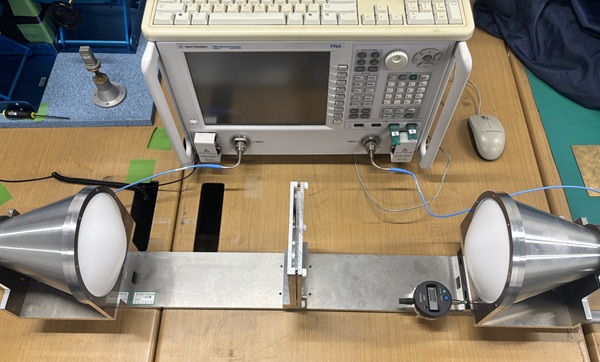
Free-Space Method Platform
Uses a pair of lens antennas to evaluate the reflection, transmission, and shielding characteristics, as well as complex relative permittivity, of flat samples under non-contact, oblique-incidence conditions.

Microwave Probe Station
Directly probes wafers and small high-frequency planar circuit boards for on-chip and on-board characterization.
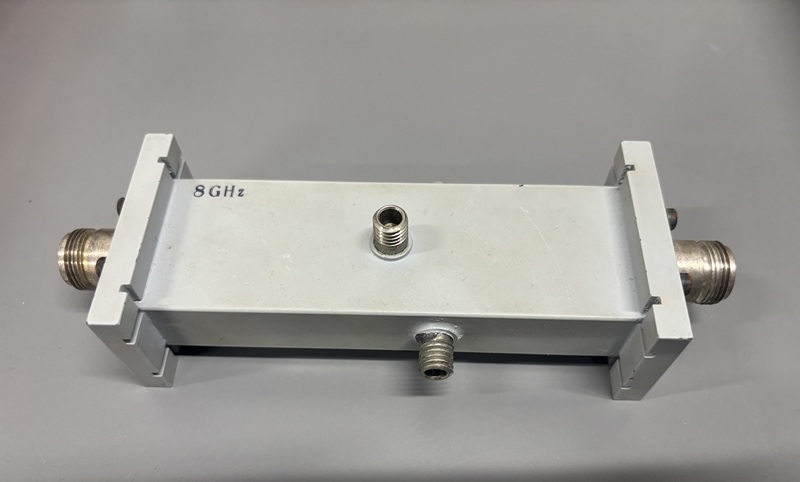
Cavity Resonator for Permittivity/Permeability Measurement
Uses high-Q resonators at each center frequency to perform ultra-precise measurement of the complex relative permittivity and permeability of low-loss materials.

Turntable
Precisely rotates an antenna in an anechoic chamber or similar facility to automatically measure its 360-degree radiation pattern.
Reference / Standard Antennas

Half-Wave Dipole Antenna
Used as a reference source for gain evaluation and environmental electromagnetic-field assessment in each communication band.

Rectangular Horn Antenna
High-gain with sharp directivity, used for millimeter-wave/microwave transmit-receive evaluation and material-irradiation systems.

Double-Ridged Horn Antenna
Has ultra-wideband characteristics, used for wide-range frequency-sweep measurements and noise measurements.

Log-Periodic Antenna
Maintains constant directivity and gain over a wide bandwidth; widely used for EMC noise measurement.

Small Loop Antenna
Used for detecting and evaluating low-frequency magnetic-field components and localized electromagnetic noise near electronic equipment.
Prototyping & Fabrication Equipment

High-Precision PCB Milling Machine
Rapidly fabricates high-precision prototypes of designed high-frequency planar circuits and microstrip antenna boards via mechanical milling.
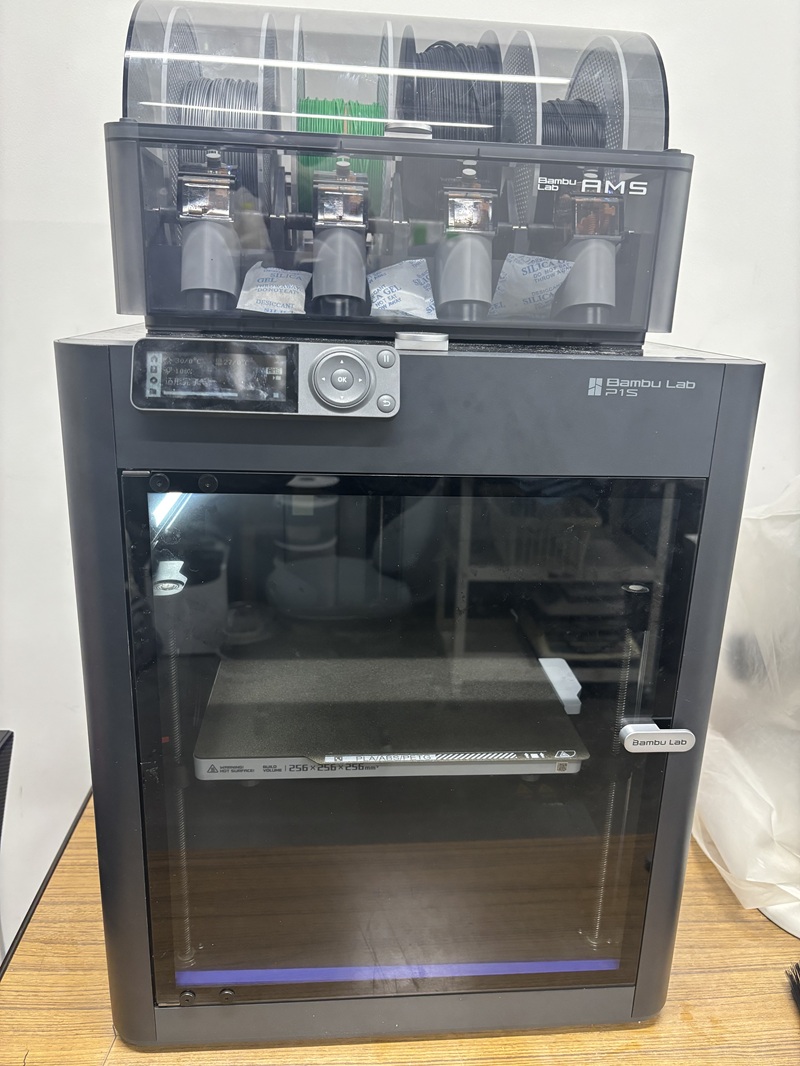
3D Printer
Used for prototyping dielectric lenses and fabricating support fixtures for various antennas.
Numerical Analysis / Simulation Environment

Electromagnetic-Field / Propagation Simulation System
Dedicated parallel workstations perform high-speed 3D full-wave analysis, extraction of parasitic parameters in packaging, and large-scale ray-tracing propagation analysis for indoor environments and airport surfaces.