 Suga Lab., Dept. of Electrical Engineering and Electronics, Aoyama Gakuin University
A more detailed explanation of the individual research themes our laboratory is working on.
Design and Optimization of High-Efficiency Planar Circuits, Antennas, and Passive RF Components for Next-Generation Wireless Systems.
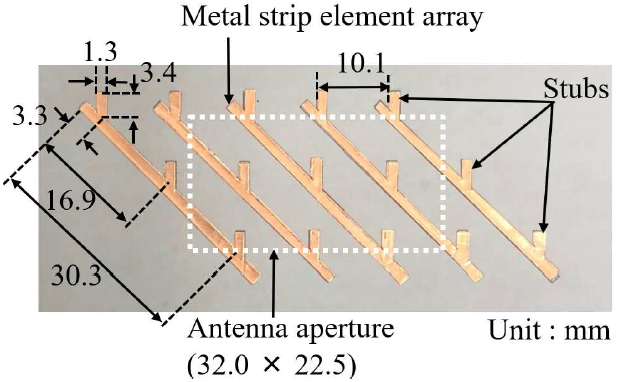
We proposed a split-type polarization converter for linearly polarized horn antennas. The propagation delay between the aperture and the array produces the phase difference required between the vertical and horizontal polarizations. It converts polarization with low loss while keeping the impact on the main antenna's gain and directivity to a minimum.
( IEICE Trans. Electron.)
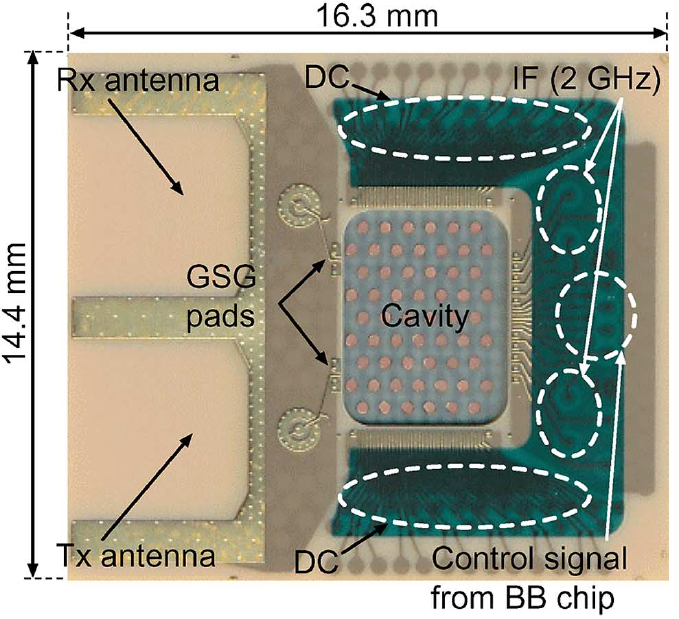
We proposed a compact, low-cost surface-mount antenna package using a ceramic multilayer substrate for short-range, high-speed 60 GHz-band communication.
A slot waveguide arranged on the side of the substrate achieves end-fire radiation parallel to the ground substrate.
By placing the receiver amplifier adjacent within a single package and applying a slab waveguide with metal side walls, we simultaneously achieved high isolation and 6 dBi of gain.
( IEEE Trans. MTT.,
IEEE Trans. MTT.)
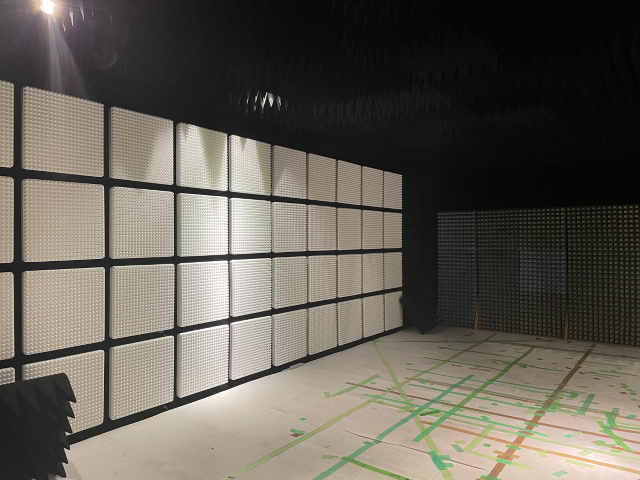
We measure the radiation characteristics of antennas in our lab's own anechoic chamber.
Characterization of Complex Permittivity and Permeability, Development of Ultra-Thin/Wideband Electromagnetic Absorbers, and Advanced EMI Shielding Metrology.
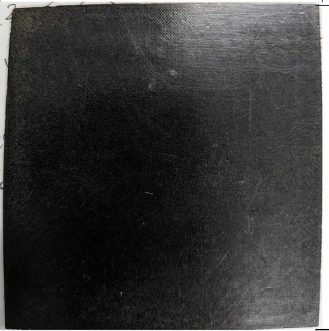
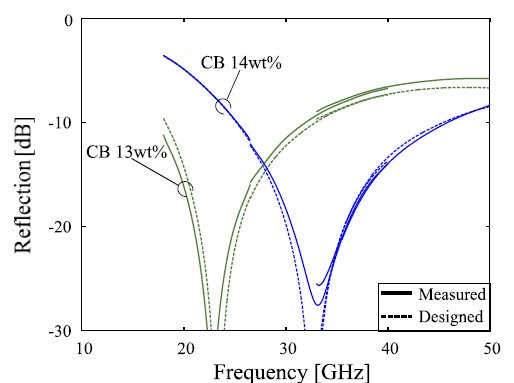
We are researching devices that use only a single layer of absorbing material to efficiently absorb radio waves at a specific frequency. By stacking multiple dielectric layers with different complex permittivities, we can achieve higher absorption performance over a wider frequency band—for both incoming and transmitted waves—than any single layer alone. ( IEICE Trans. (C) (in Japanese) , IEICE Trans. (B) (in Japanese) )
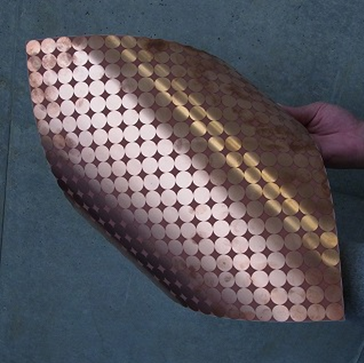
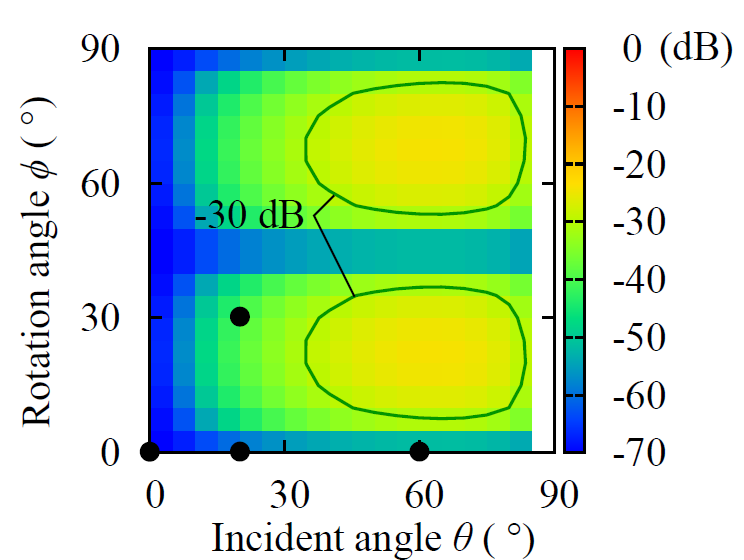
We proposed an ultra-thin (1/200 wavelength) radio wave absorber formed by placing a metal ground plane on the back of an FR-4 substrate and a periodic array of thin metal patches on the front. We further established a design method that models the absorber's reflection coefficient as the superposition of contributions from the metal thin film and the ground plane. Building on the polarization (incident-angle) dependence of this absorber's reflection coefficient, we also proposed a method for estimating the impedance at four different incident angles. ( IEICE Trans. Electron. , IEICE Trans. Electron. )
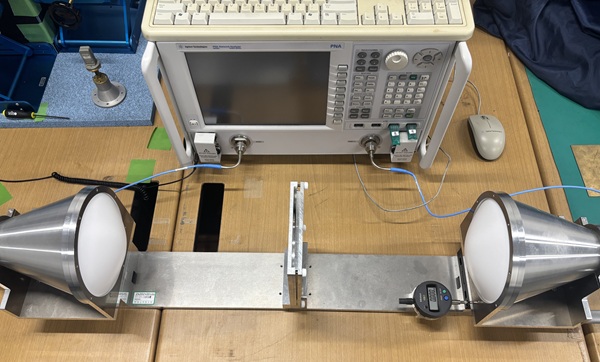
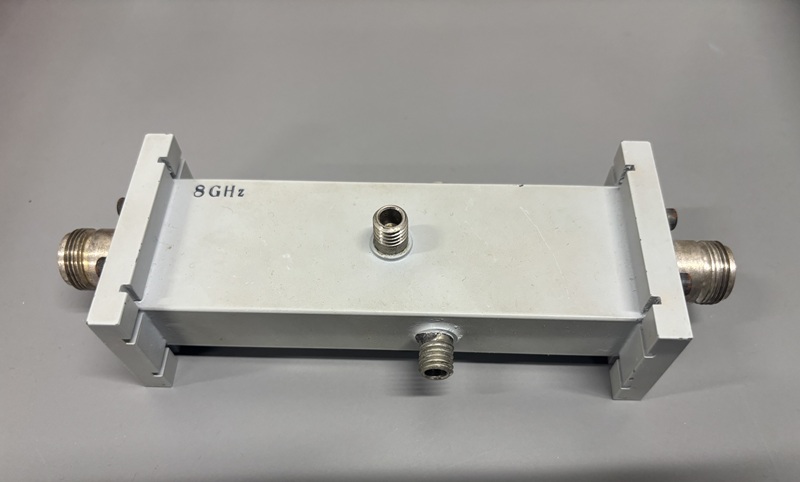
Our lab has established measurement techniques—using cavity resonator methods and free-space methods—to accurately evaluate, across a wide frequency range, the complex relative permittivity and complex relative permeability that determine the high-frequency response of new materials and building materials.
Non-Destructive Testing (NDT), Infrastructure Health Monitoring, and Biological Sensing Using Microwave/Doppler Radar Technologies.
To evaluate the effects of communication devices such as smartphones on the human body (electromagnetic exposure / local SAR), we are developing the composition of phantoms—artificial tissue models—that can accurately reproduce, over a wide frequency band, the electrical constants of human tissues such as skin, muscle, and fat. ( IEEE J. Electromag. RF Microw. Med. Biol. , IEEE Trans. Electromagn. Compat. )
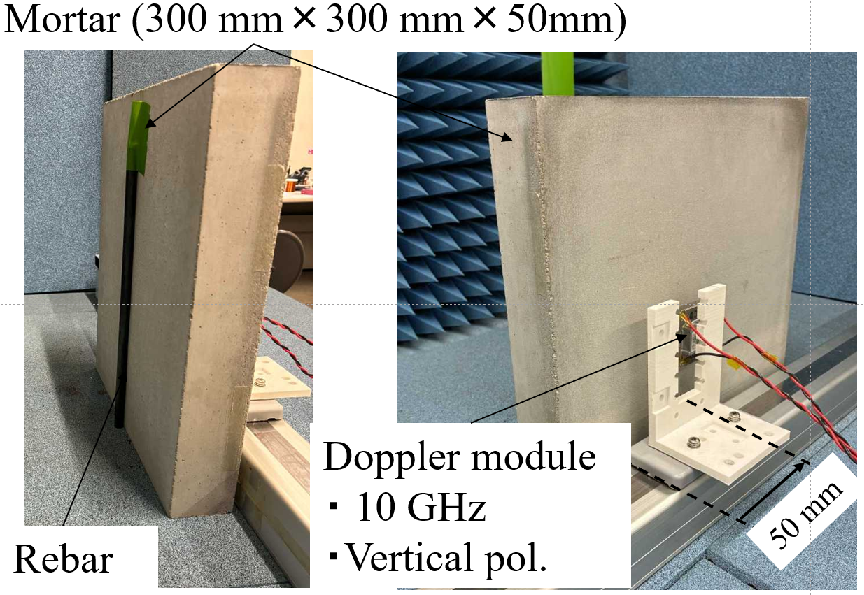
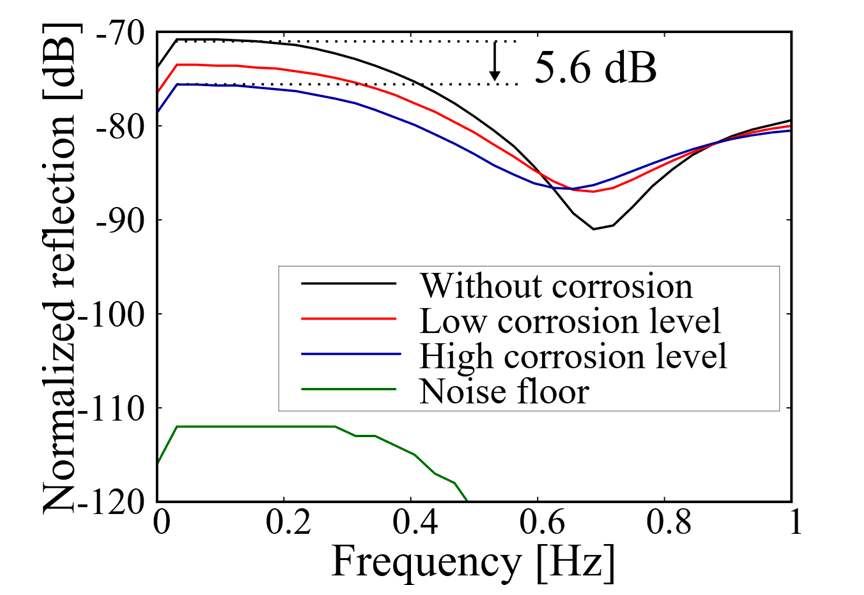
We developed a new corrosion-inspection technique that detects rust on internal reinforcing bars without breaking through the wall. By using a microwave sensor to suppress unwanted reflections from the wall surface, it can detect rust on rebar behind a 50 mm-thick mortar wall. ( IEEE Trans. Radar Syst. )
 ,
, 
Moisture management is essential for the quality control of food, building materials, and agricultural products, from the standpoints of safety, durability, and quality improvement. We are researching the feasibility of detecting moisture content using 24 GHz-band FMCW radar. ( Asia-Pacific Microwave Conf.)
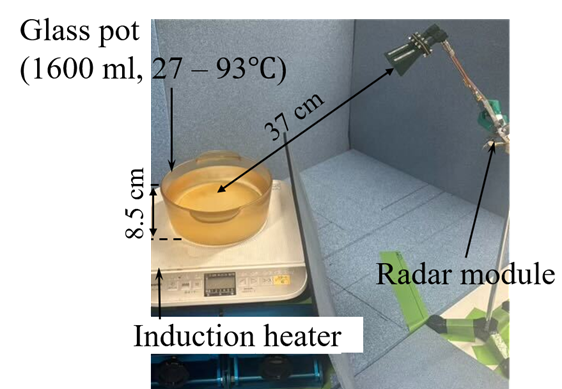
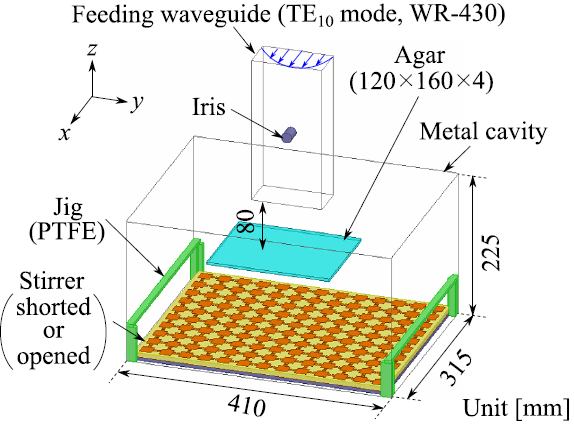
For suppressing uneven heating in microwave ovens, we proposed a new approach that uses neither a turntable nor a rotating antenna, and we are studying it through both electromagnetic-field analysis and experiments.
( IEICE Trans. Electron. )