 Suga Lab., Dept. of Electrical Engineering and Electronics, Aoyama Gakuin University
Our research themes, with the related papers and figures.
Research on planar circuits and antennas in the microwave and millimeter-wave bands.
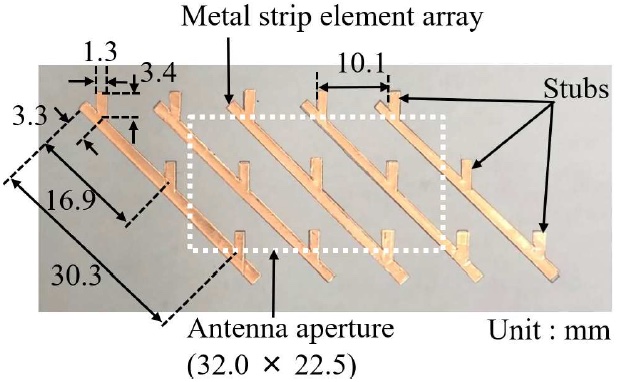
We proposed a single-layer circular polarizer for linearly polarized horn antennas operating at 22.25 GHz. Multiple reflections between the aperture and the array provide the required phase difference between the vertical and horizontal polarizations. The changes in the gain and beamwidth of the horn antenna were within 1.7 dB and 10 degrees, respectively.
(IEICE Trans. Electron.)
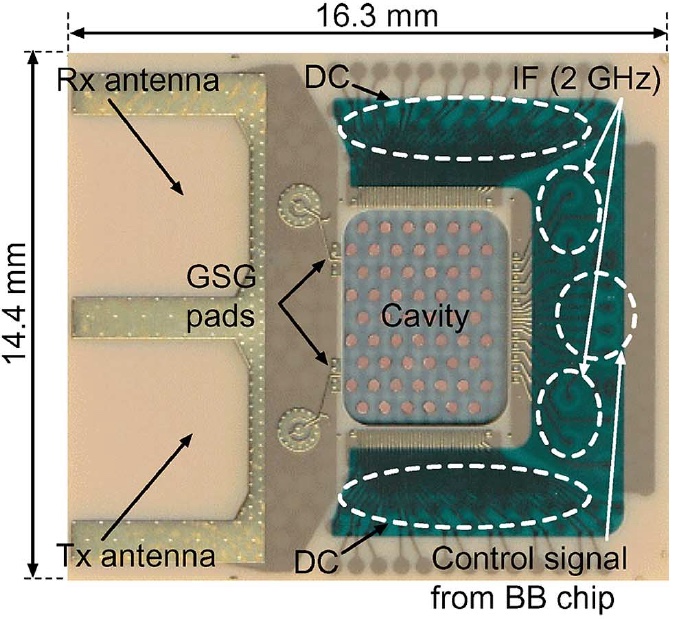
We proposed a small, cost-effective antenna package for mobile terminals of 60 GHz-band wireless systems, mounted on the edge of a printed circuit board by ball-grid-array assembly. End-fire radiation is obtained from the open end of a post-wall waveguide built into the side of the package.
Two antennas for transmitting (Tx) and receiving (Rx) were integrated in one package using a slab waveguide with metal sidewalls, and an average isolation of 46.0 dB between the Tx and Rx antennas and a gain of more than 7.8 dBi were measured from 59 to 66 GHz.
(IEEE Trans. Microw. Theory Tech.,
IEEE Trans. Microw. Theory Tech.)
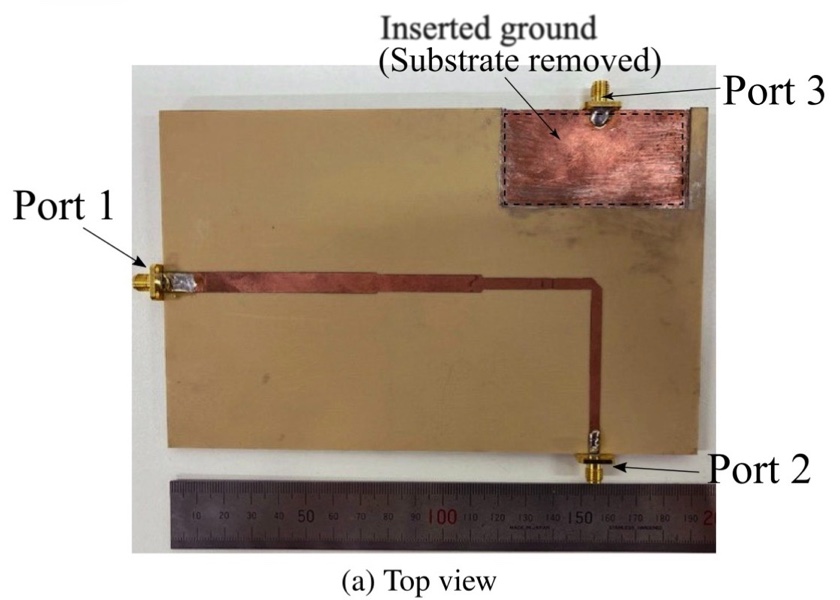
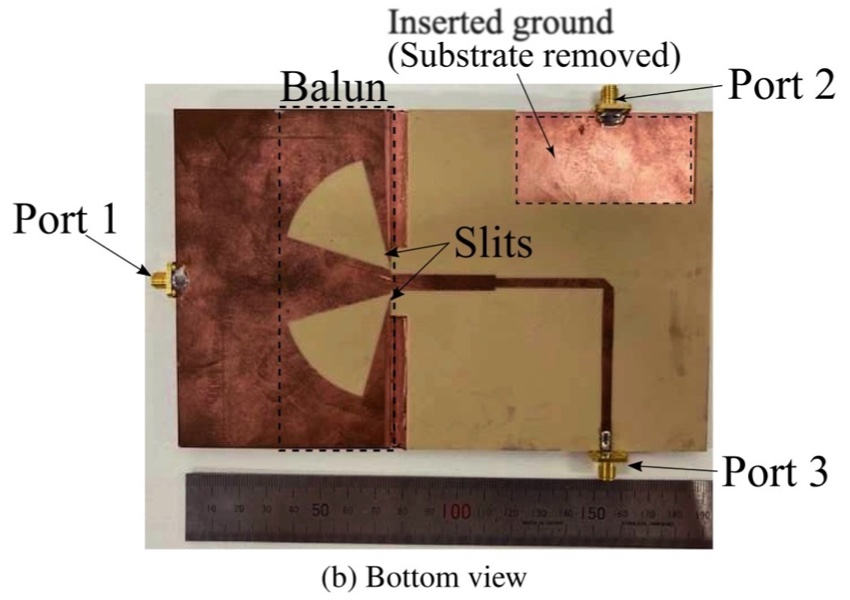
We proposed a simple and compact planar balun with a slit ground. The operating frequency can be designed by the length and position of the slits in the ground plane. The fabricated balun achieved a fractional bandwidth of over 90% for a common-mode rejection ratio of 20 dB or more. (IEICE Trans. Electron.)
We fabricated an optically transparent monopole antenna using a graphene film as the electrode material. By stacking three graphene layers and carrier doping with an ionic liquid, a sheet resistance of 80 Ω/sq. and an optical transmittance of more than 90% were obtained. The radiation efficiency measured by the Wheeler cap method was 52.5% at 9.8 GHz. (AIP Advances)
Note: Joint research with the Koh Laboratory in our department.
We measure the radiation characteristics of antennas in our lab's own anechoic chamber.
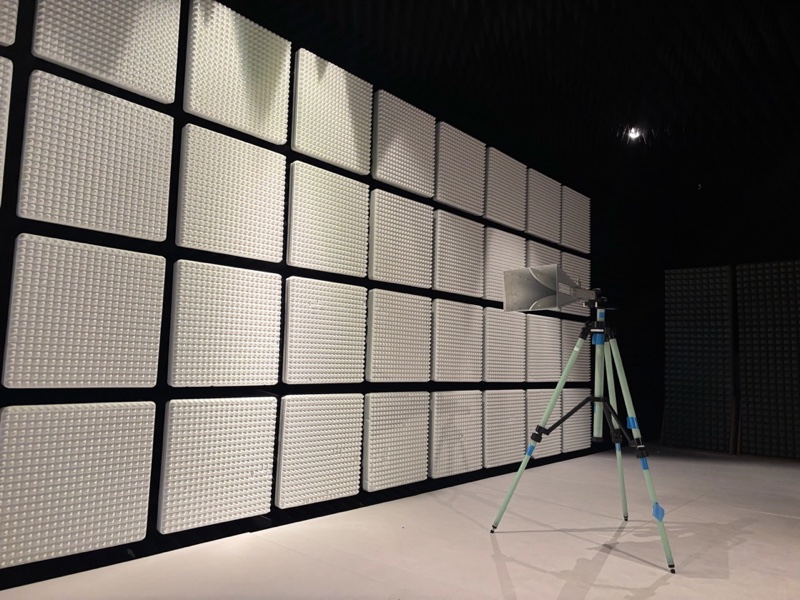
Research on shielding and radio wave absorption techniques that prevent malfunctions of electronic equipment caused by unwanted radio waves (electromagnetic interference, EMI), and on measuring the material constants needed to design them.
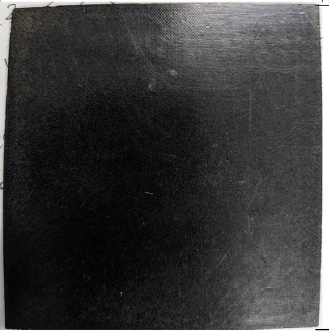
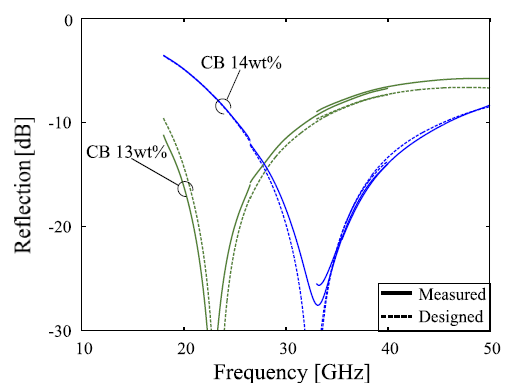
We study radio wave absorbers that absorb radio waves at a specific frequency using a single layer of absorbing material. Using a material that mixes modified lignin, a bioplastic, with phenolic resin, we fabricated absorbers with center frequencies of 23.0 GHz and 33.2 GHz (−20 dB fractional bandwidths of 17.4% and 15.6%, respectively). We also realized a thin C-band absorber using a material with oriented high-aspect-ratio fillers, with a filler content of 11 vol% and a thickness of 0.029 wavelengths. (IEICE Trans. (C) (in Japanese), IEICE Trans. (B) (in Japanese))
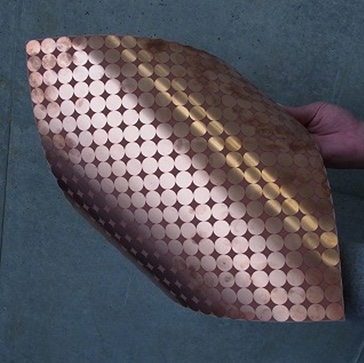
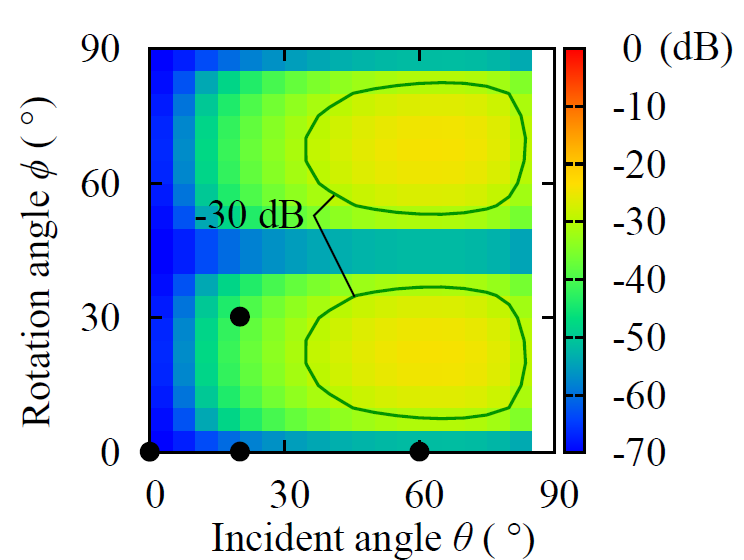
We proposed an ultra-thin (1/200 wavelength) radio wave absorber formed by placing a metal ground plane on the back of an FR-4 substrate and a periodic array of thin metal patches on the front. We further proposed a design method that represents the reflection coefficient as the superposition of the reflection coefficients of the metal patches and the ground plane; the designed center frequency and −15 dB fractional bandwidth agreed with electromagnetic simulation within 0.1%. We also proposed a method for estimating the S-parameters at arbitrary polarizations and incident angles from the impedances at only four incident angles. (IEICE Trans. Electron., IEICE Trans. Electron.)
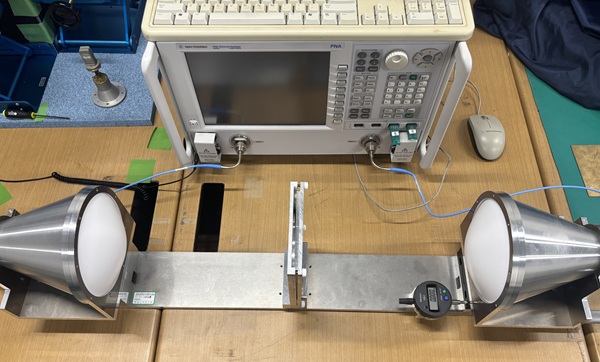
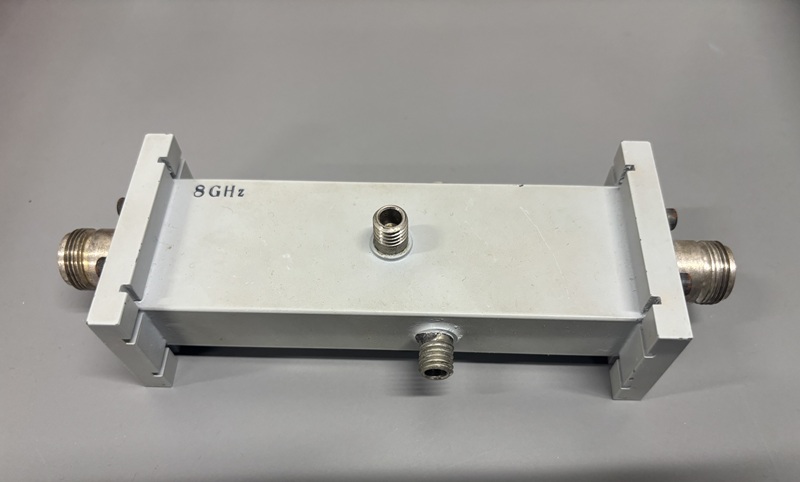
We measure the complex relative permittivity and permeability of new materials and building materials using the free-space method and cavity resonator methods (free-space method: 1–50 GHz; cavity resonator method: seven frequencies from 2.45 to 12 GHz).
Research on evaluating the effects of radio waves on the human body (bioelectromagnetics, BioEM), on inspecting structures and materials without damaging them, on microwave heating, and on electromagnetic field analysis.
We study phantoms (materials that simulate the human body) for evaluating exposure to quasi-millimeter and millimeter waves. For absorbed power density (APD) measurement at 28 GHz, we showed by electromagnetic simulation that a low-loss phantom using polyphenylene ether (PPE), a common antenna substrate material, enables APD assessment on the skin surface regardless of the antenna type. We also developed a semisolid phantom that simulates the temperature elevation at the skin surface due to exposure from 10 to 100 GHz, by optimizing the composition of a material consisting mainly of water and glycerin. (IEEE J. Electromagn. RF Microw. Med. Biol., IEEE Trans. Electromagn. Compat.)
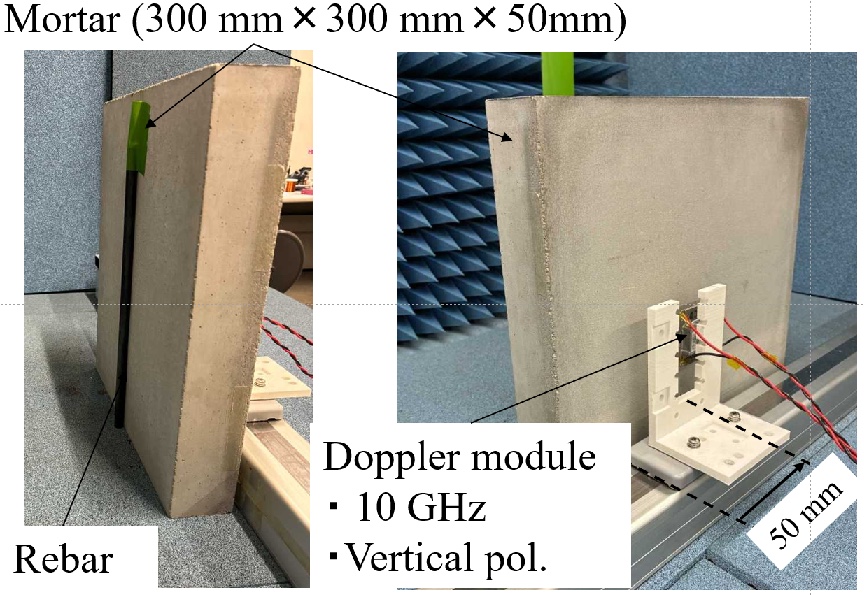
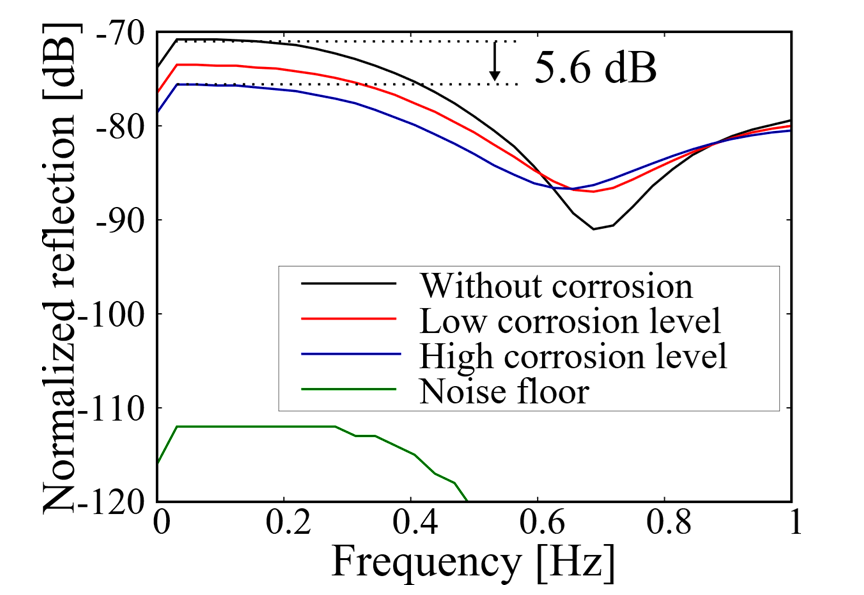
We proposed a non-destructive method for detecting corrosion on rebar embedded in a mortar wall using a 10 GHz Doppler sensor. Moving the transmitting and receiving antennas parallel to the wall induces a Doppler shift that suppresses unwanted reflections from the wall surface. An attenuation of 7.8 dB due to corrosion was observed for a 9-mm-diameter rebar with a corrosion level of about 100 mg/cm² behind a 50-mm-thick mortar wall. (IEEE Trans. Radar Syst.)
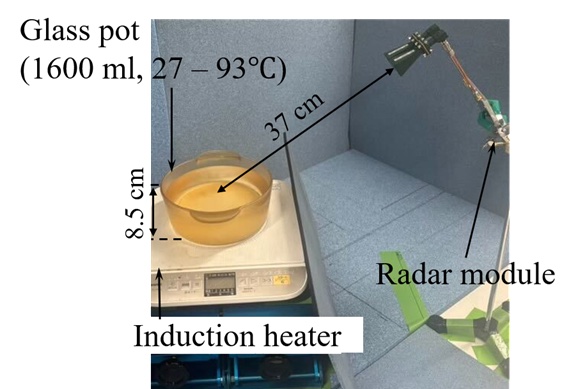
We studied a non-contact method for detecting the boiling process of water using a 24 GHz-band FMCW radar. We measured the signals reflected from the surface of water heated by an induction heater and analyzed the peak received level and the average velocity. The peak level increased monotonically at surface temperatures above 65 °C, indicating surface fluctuations before boiling. A non-zero velocity was detected only near the saturation temperature of about 93 °C, indicating the onset of vigorous boiling. (2025 Asia-Pacific Microw. Conf.)
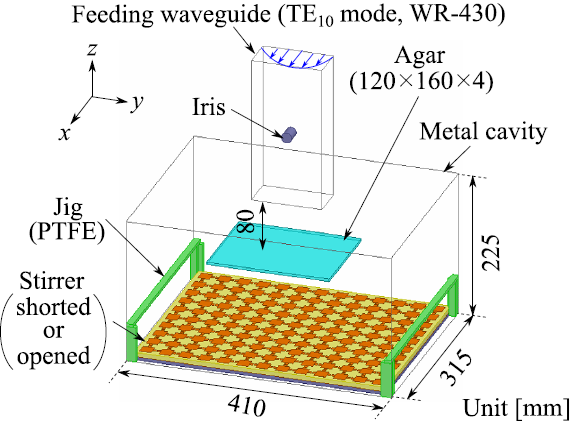
To improve uneven heating of objects in a microwave oven, we proposed a planar electromagnetic field stirrer with periodically arranged metal patterns and diode switches. Switching the states of the diodes changes the reflection phase of the stirrer and stirs the electromagnetic field in the oven. The temperature distribution of a heated object was simulated and measured; the heated parts changed with the diode states, which experimentally indicated the improvement in uneven heating.
(IEICE Trans. Electron.)
We proposed a hybrid analysis method suited to radio wave propagation on airport surfaces, combining the two-dimensional FDTD method and the ray-tracing method. The two-dimensional FDTD method calculates the power variation due to ground reflection, refraction, and creeping, and the ray-tracing method calculates the power reflected and diffracted by buildings. We validated the method by measurements at 5 GHz using a 1/50 scale model of an airport with a building model. The measured power distributions agreed with the analysis to within 4.8 dB, and the null positions were estimated with an error of less than 0.01 m. (IEICE Trans. Electron., IEICE Trans. Electron.)